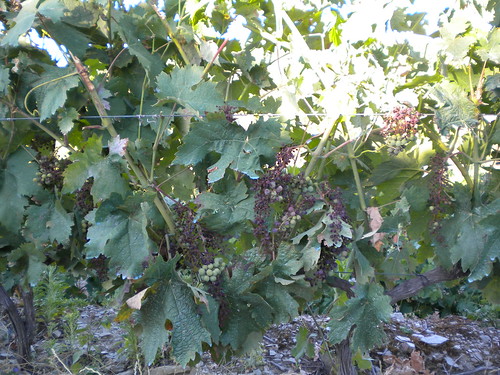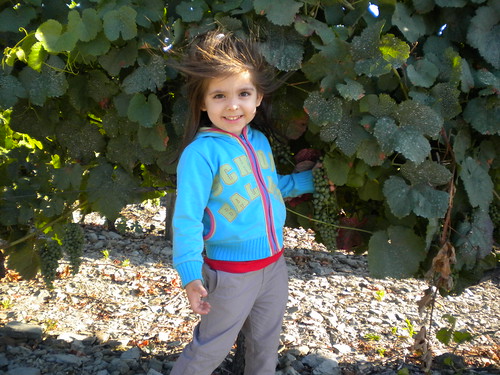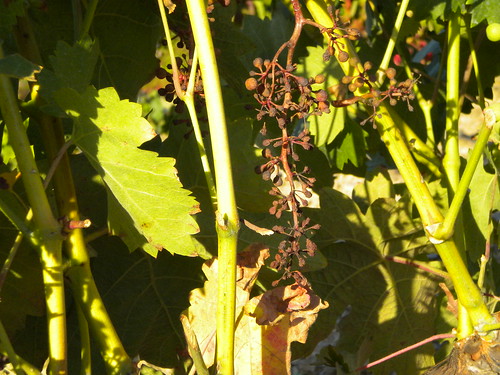
O cultivo das uvas está longe de ser um processo previsível e espectável, dado dependermos muito das condições climatéricas. Às vezes demasiado. Tanto, que clima adverso pode destruir o que cremos ser uma boa colheita. E foi isso que aconteceu com a nossa Tinta Roriz. Enquanto estávamos na Vinexpo, uma feira de vinhos que teve lugar em Bordéus entre os dias 19 e 24 de Junho, as nossas uvas estavam a ser atacadas pelo míldio. Uma estimativa detalhada indica que se perdeu mais de 50% da Tinta Roriz, cerca de 15% da Touriga Nacional, Touriga Franca e Sousão. A propriedade mais afectada foi a Quinta da Trovisca, onde algumas das videiras perderam todos os cachos, como mostram as fotos.
 O meu pai diz que a situação deste ano faz lembrar-lhe a colheita de 1988, quando uma grande parte da produção foi destruída também devido ao míldio. Nessa altura eu tinha só 5 anos e não me lembro de nada do que aconteceu. Mas recordo-me que há quatro anos atrás, em 2007, houve também um ataque de míldio por todo o Douro, e não foi por isso que não fizemos um dos melhores, senão mesmo o melhor Vinho do Porto da década. Quer isto dizer que o míldio não vai afectar a qualidade, desde que se tenha o cuidado de remover os cachos secos dos cestos da vindima. Deverá até mesmo melhor a qualidade dos cacho que ficam na videira. Uma vez que a videira tem menos produção, vai concentrar os esforços em amadurecer em boas condições o fruto que resta.
Daquilo que falei com outros produtores, parece que o míldio afectou todo o Douro. Imagino que poucos o irão admitir, e jurarão que está tudo em perfeitas condições nas suas vinhas. Mas o que parecia uma colheita generosa há dois meses atrás está agora transformada numa produção reduzida. E esta redução da quantidade irá certamente melhorar a qualidade de Vinhos do Porto e Douro e ao mesmo tempo subir os preços de ambos os vinhos.
 Deixe os seus comentários e questões, terei todo o gosto em responder às suas perguntas.
Oscar