TRUQUES DISTINGUIDO COM PRÉMIO DE OURO PELO SEU DESIGN
O design dos rótulos da nossa gama TRUQUES, vinhos Douro D.O.C. foi distinguida com o Graphis Gold Award – Packaging 11, um dos prémios internacionais mais reconhecidos na área do...



 As coisas não estão a correr como desejado pelo Douro. Depois de um inverno muito seco e de uma molhada e ventosa floração, agora, em pleno verão, foi a hora do granizo. Até agora houve duas trovoadas que deixaram marcas. A primeira foi na quarta-feira da semana passada, na área de Sabrosa. Depois, na sexta-feira, próximo de Horta do Douro, a sudeste do vale do Douro. A trovoada de quarta-feira, à volta de Sabrosa, foi muito forte, destruindo não só as uvas mas também as varas da videira, o que poderá afetar a planta por um período mais longo de tempo, o qual vai requerer uma atenção especial durante a poda. Também as uvas que ficaram nas videiras estão danificadas na maioria dos casos e podem não atingir a maturação completa.
Mas este é só o mais recente capítulo de uma temporada que nunca esteve nos carris. Estamos ainda muito longe dos níveis de pluviosidade esperados para o Douro. Na verdade, entre Outubro de 2011 e Julho de 2012, a precipitação ficou abaixo dos 50% habituais. O que é que isto quer dizer numa das mais secas (especialmente o Douro Superior que conta com 1/3 da pluviosidade do Baixo-Corgo) regiões vínicas na Terra? Um tempo conturbado para as videiras. As temperaturas têm oscilado entre os 20º C e muitos e os 40º C e poucos, com temperaturas durante a noite a não descerem dos 18º C. O nível de água no solo é baixo e as videiras, em alguns casos, não têm humidade suficiente nas raízes para levarem a cabo a maturação. Deste modo, as videiras poderão abandonar a maturação da uva para proteger a sua própria vida. A somar a isto está um par de vagas de calor, nos finais de Junho e meados de Julho que queimaram a pele das uvas. Passados uns dias, os bagos mais expostos ao sol estavam secos. Surpreendentemente, isto aconteceu não só nas zonas mais quentes junto ao rio, mas também em zonas de maior altitude, mais frescas e protegidas.
Ainda é um pouco cedo para falar da produção total no Douro, e eu não sou bom nisto, mas uma queda de 10% na produção total de uvas não deve andar longe da realidade. A produção de Vinho do Porto vai aumentar para 96.500 pipas de 550 litros, o que representa um aumento de cerca de 13.5% em relação ao ano de 2011. Ou seja, veremos a produção de Vinho do Douro diminuir.
Se está a pensar ter uma criança em 2012, talvez não consiga encontrar uma garrafa de um Vinho do Porto de topo para recordar a data. E talvez já seja tarde para atrasar o nascimento para 2013. Também aqui não há muito a fazer.
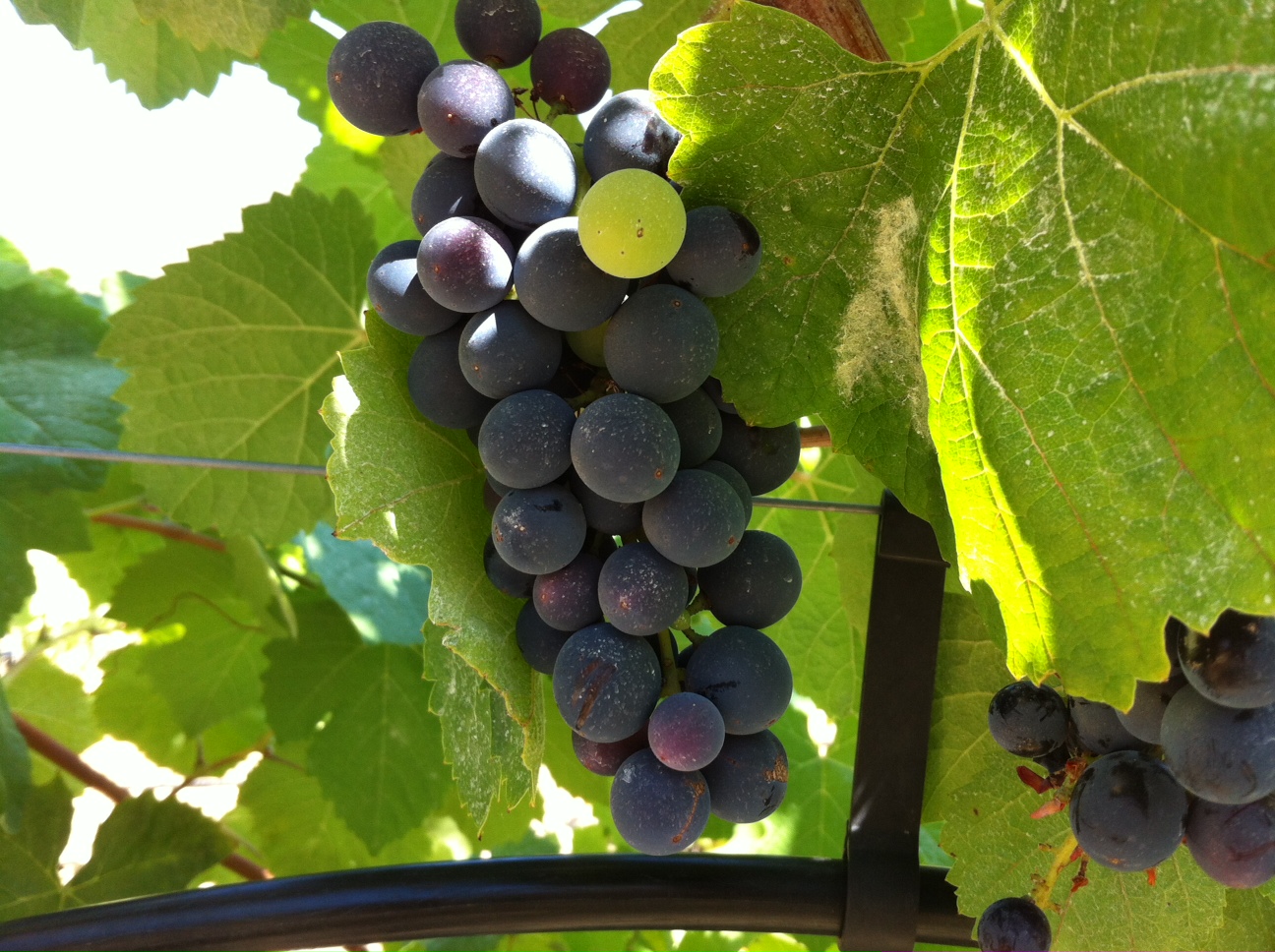
Algumas palavras sobre a foto acima. O pintor está agora a terminar nas partes mais quente do Douro, 15-20 dias mais tarde do que o habitual. Isto quererá dizer que a maioria das vindimas no Douro começará na terceira semana de setembro. As uvas brancas para vinhos de mesa deverão começar como de costume, em finais de Agosto.
Deixe os seus comentários, certamente que há por aí alguma pergunta a fazer!
Oscar
